Hagia Sophia (Ayasofya)
Marmara, Turkey 58 tours visit here
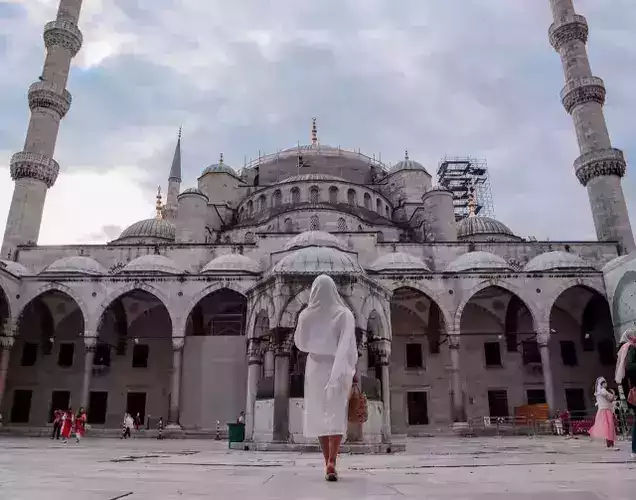
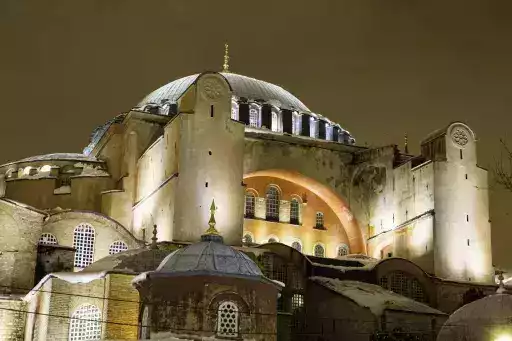
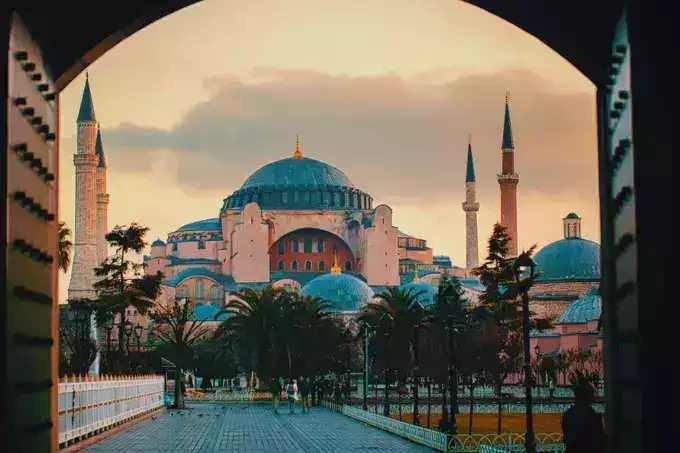
Hagia Sophia stands in Sultanahmet, at the heart of Istanbul's old city, facing the Blue Mosque across a public square and close to Topkapi Palace and the Basilica Cistern. Completed in 537 AD under the Byzantine emperor Justinian I, it was the cathedral of Constantinople for nine centuries, became an Ottoman mosque after the conquest of 1453, later served as a museum, and functions as a mosque again today. It anchors the Historic Areas of Istanbul, a UNESCO World Heritage Site. A dome about 31 metres across rises some 55 metres above the floor, ringed by windows that make it appear to float, an engineering feat of late antiquity that shaped Ottoman mosque design for centuries. Below it are coloured marble panels, porphyry and green columns, gold-ground Byzantine mosaics and eight large calligraphic medallions added under the Ottomans. As a working mosque it is entered without shoes, with hair covered for women; the ground floor is given over to prayer, while the upper gallery holds the best-preserved mosaics. An hour suits most visits, usually combined on foot with nearby monuments. Early morning is calmest, and access is restricted at prayer times, especially Friday midday.